
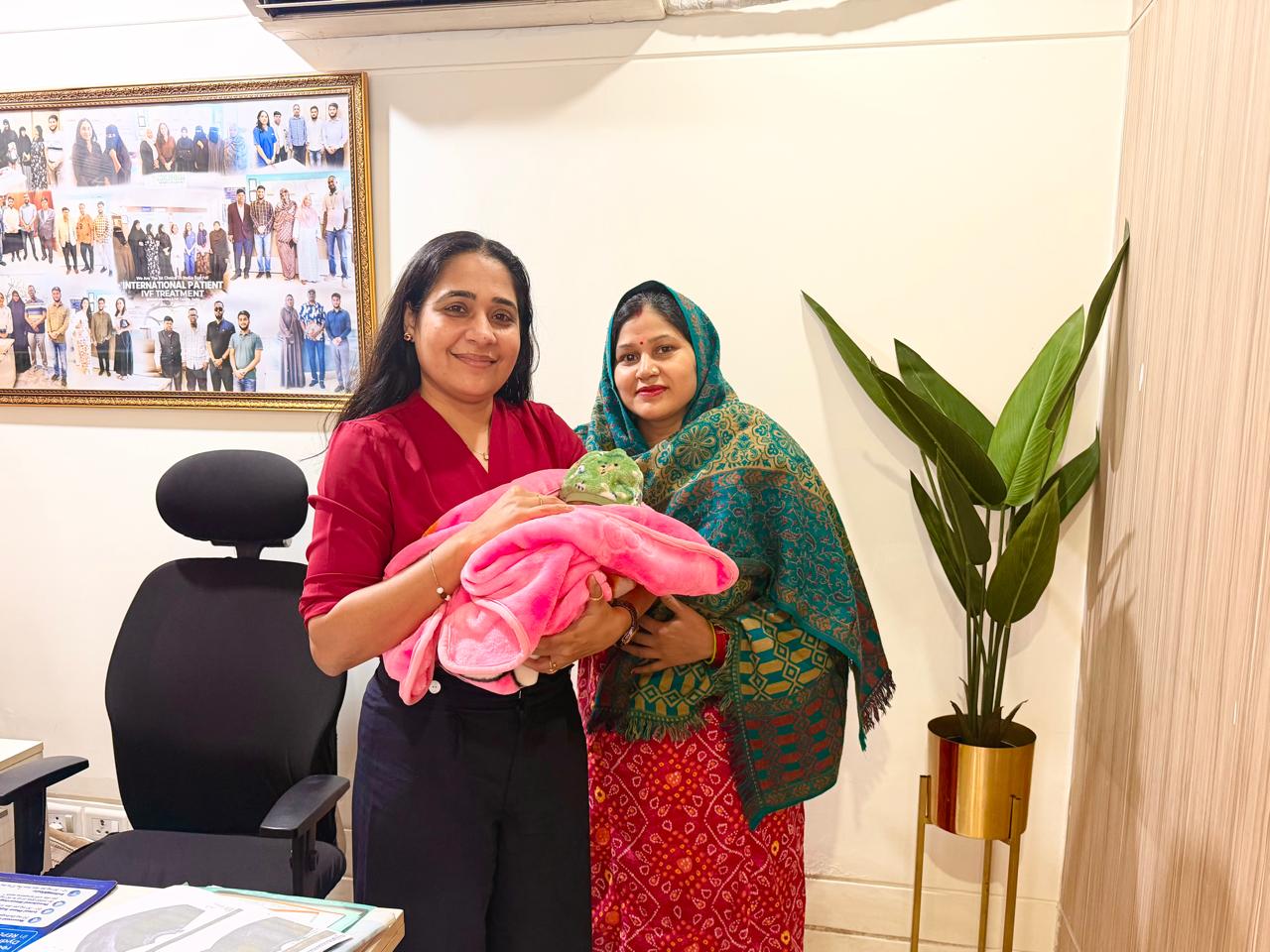
Months of trying, a negative test every cycle, and relatives asking when there will be "good news". Many couples who come to us in Kamla Nagar have been carrying this quietly for a year or more. Infertility affects a significant number of couples in India, and quite often there is a treatable reason behind it. Knowing the likely causes takes away a lot of the worry. It takes away much of the self-blame too.
This guide covers the common causes of female infertility, how we find them and what treatment usually involves. If you are looking for a fertility doctor in Delhi, it should also help you work out what to ask at the first visit. Our note on what happens at a first fertility consultation goes through that visit in detail.
What is female infertility?
Infertility is usually defined as not conceiving after 12 months of regular unprotected intercourse, or after 6 months if the woman is 35 or older. Female infertility means a factor on the woman's side is making conception or pregnancy harder.
Infertility belongs to the couple, though. Male factors play a role in many cases, so we check both partners together. Read more in our guide to male infertility causes and treatment.
Common causes of female infertility
For a pregnancy to happen, an egg has to be released and meet sperm in a healthy fallopian tube. The embryo then has to implant in a receptive uterus. A problem at any point along the way can cause difficulty.
Ovulation problems
- PCOS (polycystic ovary syndrome) is one of the most common reasons for irregular or absent ovulation. Our guide on PCOS and fertility covers it in depth.
- Thyroid disorders and high prolactin can disturb the menstrual cycle.
- Very low or very high body weight, intense exercise and stress can also upset ovulation.
Reduced egg reserve
Egg numbers and quality fall naturally with age, especially after 35. Some younger women also have a lower reserve than expected. An AMH blood test helps assess this, and our article on low AMH and ovarian reserve explains how to read the result.
Tubal factors
Blocked or damaged fallopian tubes stop the egg and sperm from meeting. Past pelvic infections, endometriosis and earlier surgery are common causes, and so is tuberculosis, which is still relevant in India. See our page on treating blocked fallopian tubes.
Uterine factors
Fibroids, polyps, a septum inside the uterus or scarring of the lining (adhesions) can affect implantation.
Endometriosis
Here, tissue similar to the uterine lining grows outside the uterus. It causes pain and inflammation, and sometimes scarring around the tubes and ovaries. Many women we see were told for years that their period pain was normal. Often it wasn't.
Unexplained infertility
Some couples have completely normal standard tests. This is called unexplained infertility. It is still very treatable.
How it's diagnosed and treated
A careful evaluation avoids guesswork and unnecessary treatment. We start with a detailed history of your cycles, past pregnancies, surgeries and general health, followed by an examination.
Tests you may be advised
- Hormone blood tests, including thyroid, prolactin, FSH, LH and AMH.
- A transvaginal ultrasound to look at the uterus, ovaries and antral follicle count.
- A tubal check with an HSG (X-ray dye test) or sono-HSG, or during laparoscopy.
- Hysteroscopy, if a problem inside the uterus is suspected.
- A semen analysis for the husband, done at the same stage.
We try to fit these into as few visits as we can. For couples coming in from Rohini or Burari after office hours, that matters.
Treatment options
Treatment depends on the cause, your age and how long you have been trying.
- Medical correction: treating thyroid or prolactin problems and working towards a healthy weight.
- Ovulation induction: tablets or injections to help regular egg release, with ultrasound monitoring.
- IUI (intrauterine insemination): prepared sperm is placed into the uterus around ovulation. Read about IUI treatment in Delhi.
- Keyhole surgery: laparoscopy or hysteroscopy for endometriosis, fibroids, polyps, adhesions or tubal problems.
- IVF and ICSI: for blocked tubes, low egg reserve or severe male factor, or when simpler treatments have not worked.
No treatment can guarantee a pregnancy. We will be honest with you about your realistic chances at each step.
When should you see a fertility specialist?
Book a consultation if:
- you are under 35 and have tried for a year
- you are 35 or older and have tried for 6 months
- your periods are very irregular, very painful or absent
- you have had two or more miscarriages
- you have known PCOS, endometriosis, fibroids or past pelvic infection
Coming early does not mean you will need IVF. More often it means a simpler, quicker path.
Lifestyle steps that support fertility
Small changes help, especially alongside treatment.
- Aim for a healthy weight. Even modest weight loss can restore ovulation in some women with PCOS.
- Eat balanced home-cooked meals. Many Delhi families are vegetarian, so protein needs a little thought. Dal, paneer, curd, sprouts, nuts and seeds all count. Ask us about iron and vitamin B12 as well.
- Start folic acid before trying to conceive.
- Avoid smoking, and limit alcohol and excess caffeine.
- Protect your sleep. Family pressure is very common here, and it is fine to set gentle boundaries while you look after your health.
Our preconception care checklist covers these steps in more detail.
Finding a fertility clinic in North Delhi you can trust
Fertility care means repeated visits for scans and monitoring, so a clinic close to home makes life easier. Couples from Kamla Nagar, Shakti Nagar, Roop Nagar, Model Town, GTB Nagar and the Delhi University North Campus area often prefer a nearby fertility clinic in North Delhi that can handle everything from basic tests to advanced treatment.
Dr. Kavita Manchanda is a fertility and IVF specialist with MBBS, MS (OBG), DNB (OBG) and FNB (Reproductive Medicine), and more than 15 years of experience. Female and male fertility care, IUI, IVF, TESA, laparoscopy and hysteroscopy are all done under one roof. You can see her full list of specialities here.
Finding the cause of infertility with Dr. Kavita in Kamla Nagar, Delhi
If you have questions about female infertility, start with a calm, unhurried consultation. Dr. Kavita Manchanda sees patients in Hindi and English at Penicillin Clinic, A-86, Central, Block A, Kamla Nagar, New Delhi. Book your appointment and we will build a plan around your test results.
Frequently asked questions
If you are under 35, come in after 12 months of regular unprotected intercourse without a pregnancy. At 35 or older, come after 6 months. With irregular periods, known PCOS, endometriosis, past pelvic surgery or repeated miscarriages, we would rather see you sooner than later.
No. Male factors contribute to a large share of cases, and sometimes both partners have something contributing. That is why we always ask for the husband's semen analysis alongside the woman's tests.
Often, yes. Many women conceive with ovulation tablets, timed intercourse, IUI, correction of thyroid or prolactin problems, or surgery for fibroids, polyps or endometriosis. IVF comes in when simpler options are unlikely to work or have already been tried.
Usually not. Most women carry on with work and normal life. Small, steady changes help, such as balanced meals, regular activity, enough sleep and reaching a healthy weight. We will tell you which of these matters most in your case.
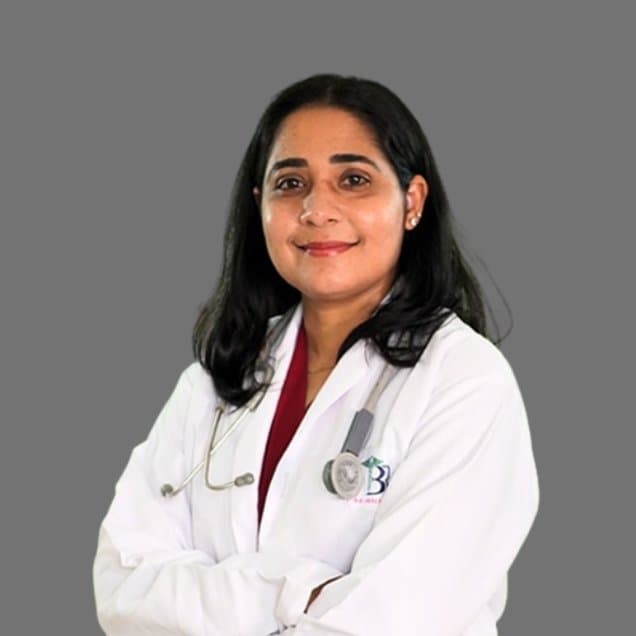
Dr. Kavita Manchanda
MBBS, MS (OBG), DNB (OBG), FNB (Reproductive Medicine). Fertility and IVF specialist with 15+ years of experience in male and female fertility, IUI, IVF, TESA, laparoscopy, hysteroscopy, pre-conception and antenatal care. Consults at Penicillin Clinic, Kamla Nagar, New Delhi.
This article is for general information and does not replace a personal consultation. Every patient is different, so please speak to a qualified doctor about your situation.